Build Search, SEO/AEO and Local strategies that help customers discover your brand when they are ready to decide.
Start with this problemWe begin with intent, technical health and lead quality to see whether search is creating opportunity or merely impressive-looking numbers.

System visual, not a client result

Build Search, SEO/AEO and Local strategies that help customers discover your brand when they are ready to decide.
Search/intent research · Build Search, SEO/AEO and Local strategies that help customers discover your brand when they are ready to decide.
Start with one business question the team must decide.
Connect source, owner and context before interpreting meaning.
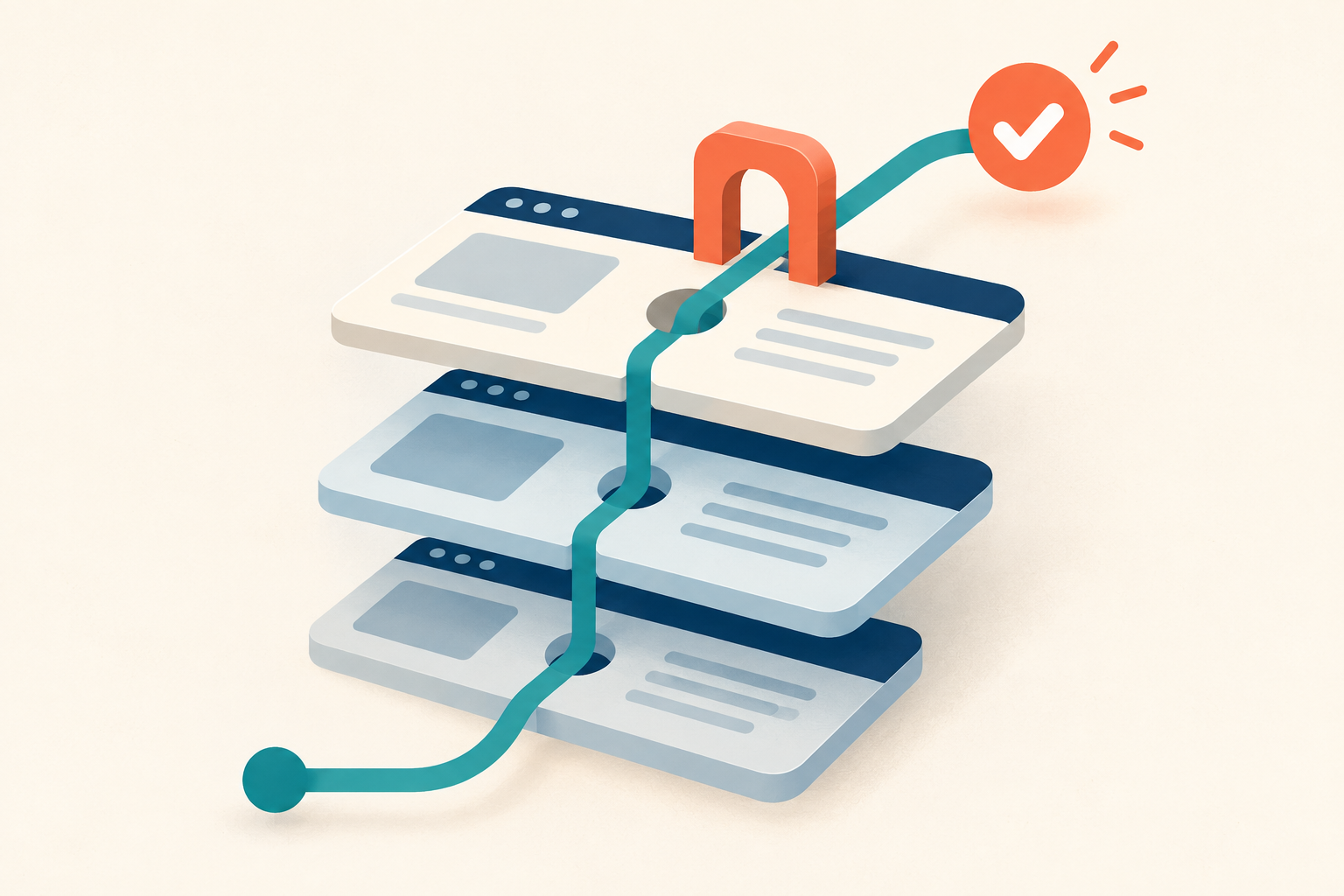
Every stage has a checkpoint before the next action.
Confirm scope and outcomes after reviewing the real baseline.
We separate what to study, fix, build and learn so every sprint answers a business question more clearly.
Relative priority · not search volume
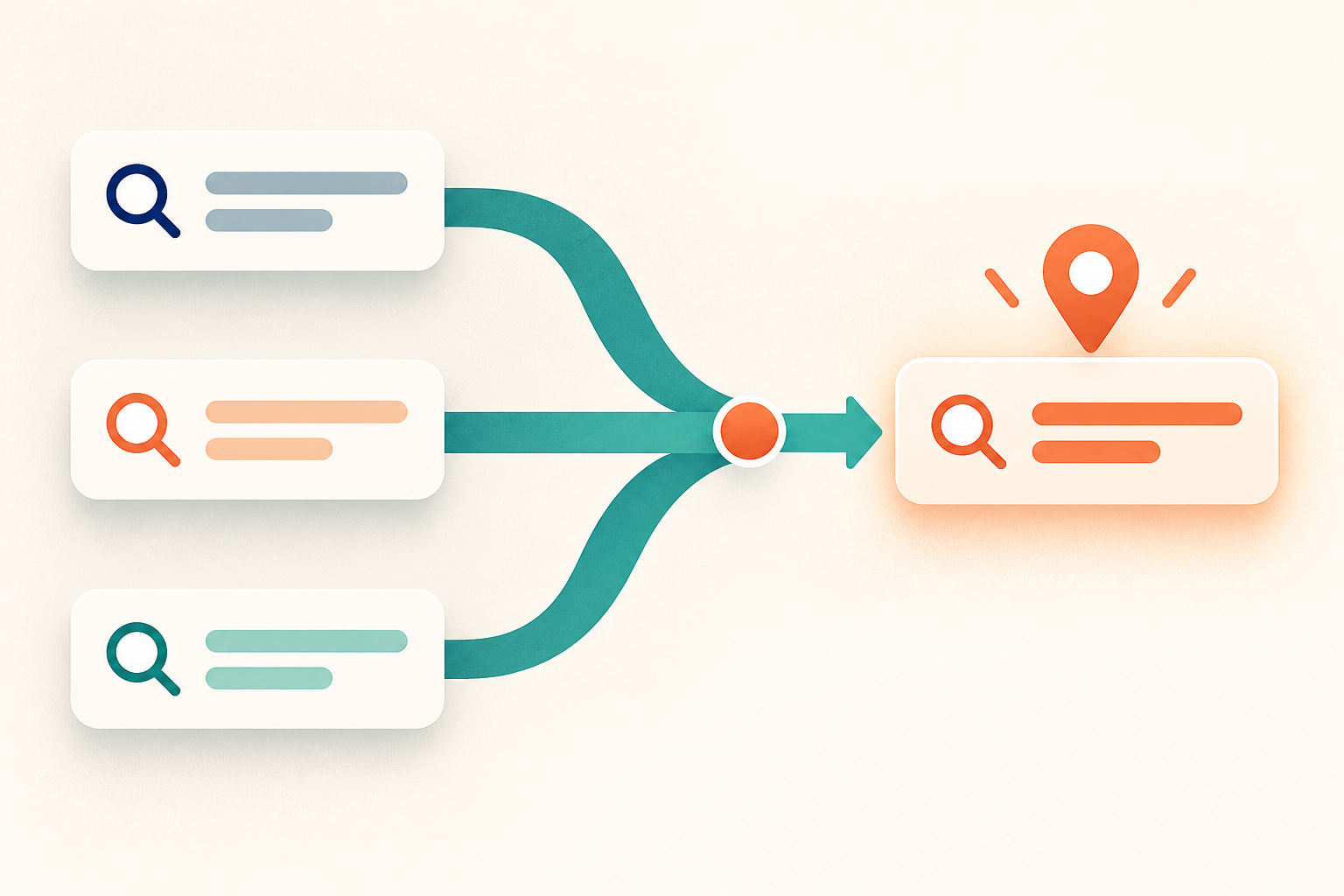
Map queries by buyer intent—not volume alone—so traffic can be separated from opportunities ready to move forward.

Inspect indexation, page structure, internal links and technical blockers, then prioritize the backlog by impact before producing more.
Build content clusters, entities and answer formats that clarify brand expertise for people and search systems—without promising AI citations.
Connect visibility with lead quality and decision review so the team knows what to stop, scale or test in the next cycle.
Responsible SEO/AEO improves the quality and context of information while acknowledging that Google and AI systems make the final display decision.
Business, service, author and source relationships need to be explicit so systems can interpret context accurately.
Content must answer real questions with scope, examples and a maintainable update path—not merely add keywords or publish at volume.
Track visibility, branded demand, citation signals and lead quality separately because no single metric proves the impact of AI Search.
Query/page baseline, indexation, local visibility and lead quality
Results remain an illustrative framework until access, baseline and scope are confirmed.
Scope, timing and investment are confirmed after reviewing access, baseline and business goals. This page does not pre-set a price or guarantee an outcome.
Clarify the baseline, measurement gaps and the most important question before deciding scope.
Organize intent, technical priorities and the content roadmap into an inspectable implementation order.
Work in cycles with decision reviews to learn, adjust and reallocate from evidence.
We show methodology and evidence status instead of inventing results.
Timing depends on the baseline, competition, approvals and website readiness. We begin by measuring the starting point and setting checkpoints rather than guaranteeing a date or rank.
No. Search and AI systems make the display decision. We improve structure, context and evidence, then track the signals that can be observed.
We start with the website, business goals, target customers and accessible data such as Search Console, analytics or CRM. If tracking is not ready, we state the limitation and prioritize the fix first.
We do not look at rankings or sessions alone. We connect intent, visibility, lead quality and business outcomes using the available data, then record what to continue, stop or test.
Start with inspectable signals, then discuss the right scope for your business.
Start with the relevant signals and baseline, then choose a scope the team can act on.